NEXTLAUNDRY
NEXTLAUNDRY is a web-based laundry management application focused on admin workflows: order intake, progress tracking, pricing management, and basic reporting. The project pairs a React-powered frontend with a performant Go backend and MySQL storage to deliver a responsive UI and a robust REST API surface for integrations.
Highlights
-
Clear separation of concerns: React for UI, Go for backend services and REST API, MySQL for data persistence.
-
Designed for admin efficiency: quick order creation, status updates, and simple reporting.
-
Lightweight, production-oriented stack chosen for speed and maintainability.
Key features
-
Order management (create / update / status tracking)
-
Customer directory and contact details
-
Pricing and service configuration (e.g., per-item or per-weight rules)
-
Basic reporting and summary views for daily activity
-
REST API for third-party integrations or mobile clients
Tech stack
-
Frontend: React (component-based UI, client-side routing)
-
Backend: Go (REST API, business logic, performance-oriented concurrency)
-
Database: MySQL (relational data model for orders/customers/pricing)
-
Deployment: Built to run on typical cloud providers or VPS; designed for containerisation.
Architecture (overview)
-
React UI — single-page application that consumes the backend REST endpoints.
-
REST API (Go) — exposes endpoints for orders, customers, pricing, and reports; responsible for validation and business rules.
-
MySQL — stores normalized tables for orders, customers, service types, and admin accounts.
Mockup
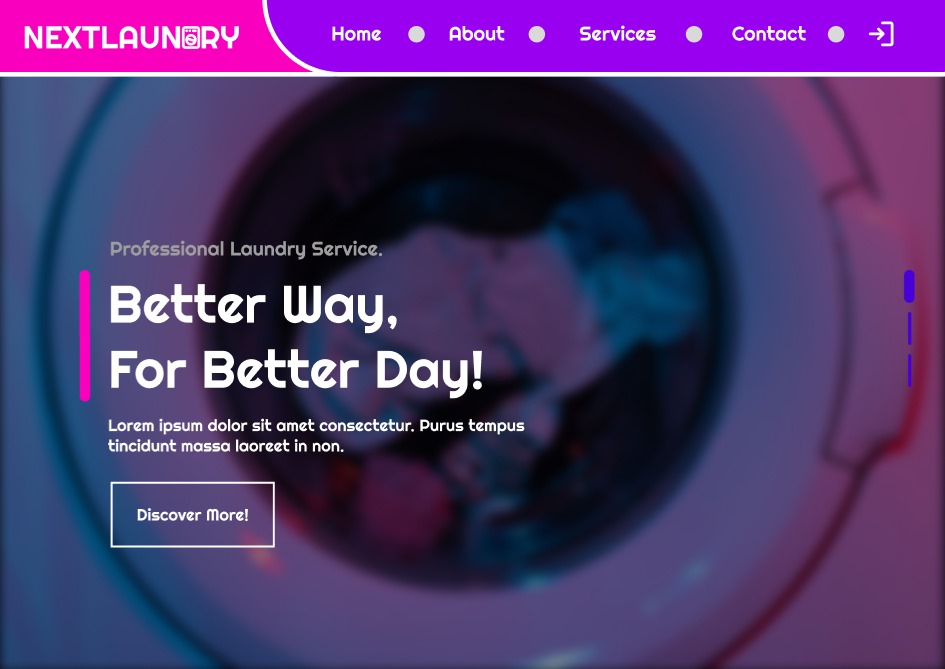
Landing Page
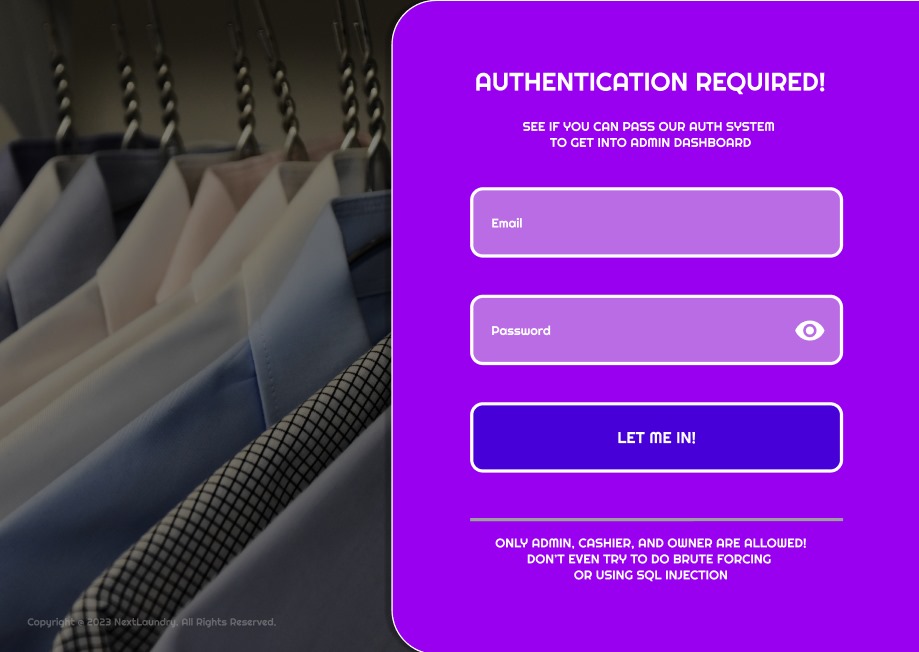
Auth Page
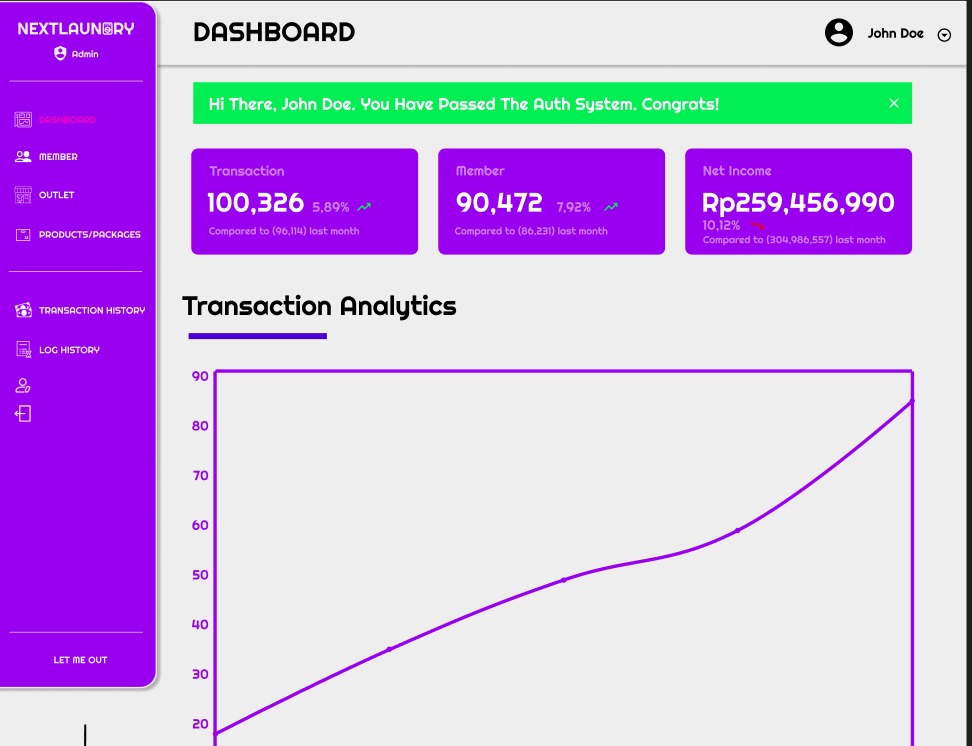
Dashboard Page
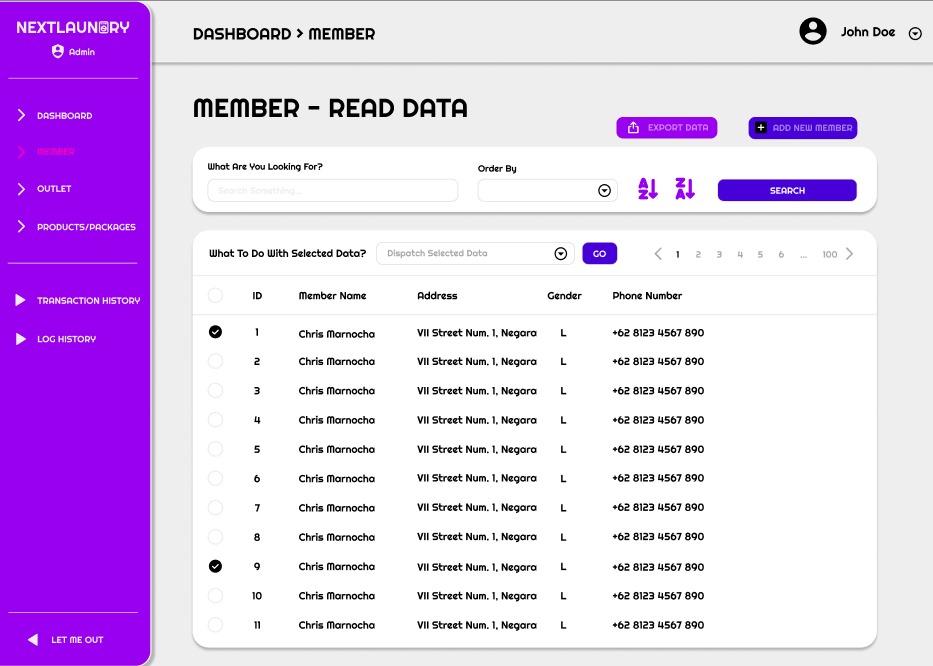
Member Page
Impact & lessons learned
-
Combining a modern React UI with a Go backend gave an excellent balance of developer ergonomics and runtime performance.
-
The project highlights the value of a small, focused API surface for admin workflows — simpler endpoints reduce UI complexity.
-
Future improvements could include authentication/authorization, background job processing for bulk operations, and richer analytics dashboards.